Research

Research Directions

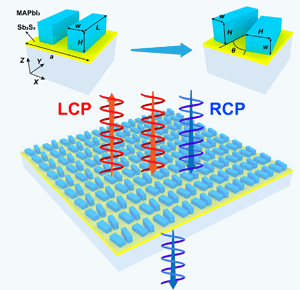
Chiral Photonics and Structured Light Manipulation representative placeholder

Research on chiral optics and structured light manipulation mainly focuses on the precise control of the polarization, phase, orbital angular momentum and chiral degrees of freedom of light. By utilizing micro-nano structures such as photonic crystals and metasurfaces, this research field realizes circular polarization selection, enhanced chiral response, vortex beam generation, vector optical field regulation and multi-degree-of-freedom beam shaping, which provides novel manipulation methods for chiral sensing, optical communication, quantum optics and integrated photonic devices.

Chiral Photonics and Structured Light Manipulation

Research on chiral optics and structured light manipulation mainly focuses on the precise control of the polarization, phase, orbital angular momentum and chiral degrees of freedom of light. By utilizing micro-nano structures such as photonic crystals and metasurfaces, this research field realizes circular polarization selection, enhanced chiral response, vortex beam generation, vector optical field regulation and multi-degree-of-freedom beam shaping, which provides novel manipulation methods for chiral sensing, optical communication, quantum optics and integrated photonic devices.

Key Questions

  • How to enhance and precisely control chiral light–matter interactions?
  • How to realize the on-chip generation and dynamic manipulation of structured light with multiple degrees of freedom?
  • How to unify the chiral response and the modulation mechanism of structured light?

Main Methods

  • Chiral Optics and Circular Dichroism Theory
  • Optical Angular Momentum and Spin-Orbit Coupling Theory
  • Theory of Micro-Nano Structure Resonance and Symmetry Regulation
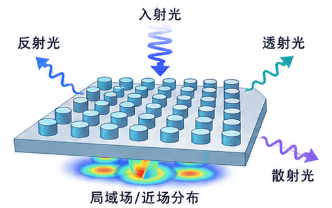
Fundamental Design and Physical Mechanisms of Photonic Crystals and Metasurfaces representative placeholder

This research direction mainly focuses on the regulation laws of optical fields in micro-nano optical structures. By designing the geometric structures, periodic arrangements and symmetries of photonic crystals and metasurfaces, it realizes the manipulation of light in terms of phase, polarization, propagation direction, localized modes and band structure characteristics. The research contents cover fundamental physical mechanisms including photonic band gaps, high-Q resonances, slow-light effects, flat bands, bound states in the continuum (BIC) modes, mode coupling and far-field radiation. It provides structural design foundations and theoretical support for application fields such as nonlinear optics, quantum light sources, chiral regulation, vortex beam generation and terahertz manipulation.

Fundamental Design and Physical Mechanisms of Photonic Crystals and Metasurfaces

This research direction mainly focuses on the regulation laws of optical fields in micro-nano optical structures. By designing the geometric structures, periodic arrangements and symmetries of photonic crystals and metasurfaces, it realizes the manipulation of light in terms of phase, polarization, propagation direction, localized modes and band structure characteristics. The research contents cover fundamental physical mechanisms including photonic band gaps, high-Q resonances, slow-light effects, flat bands, bound states in the continuum (BIC) modes, mode coupling and far-field radiation. It provides structural design foundations and theoretical support for application fields such as nonlinear optics, quantum light sources, chiral regulation, vortex beam generation and terahertz manipulation.

Key Questions

  • How does structure determine the optical field response?
  • How to realize the precise manipulation of special optical modes?
  • How to establish a design method from physical mechanisms to functional devices?

Main Methods

  • Photon Band Theory
  • Electromagnetic Resonance and Mode Coupling Theory
  • Symmetry and Topological Optics Theory
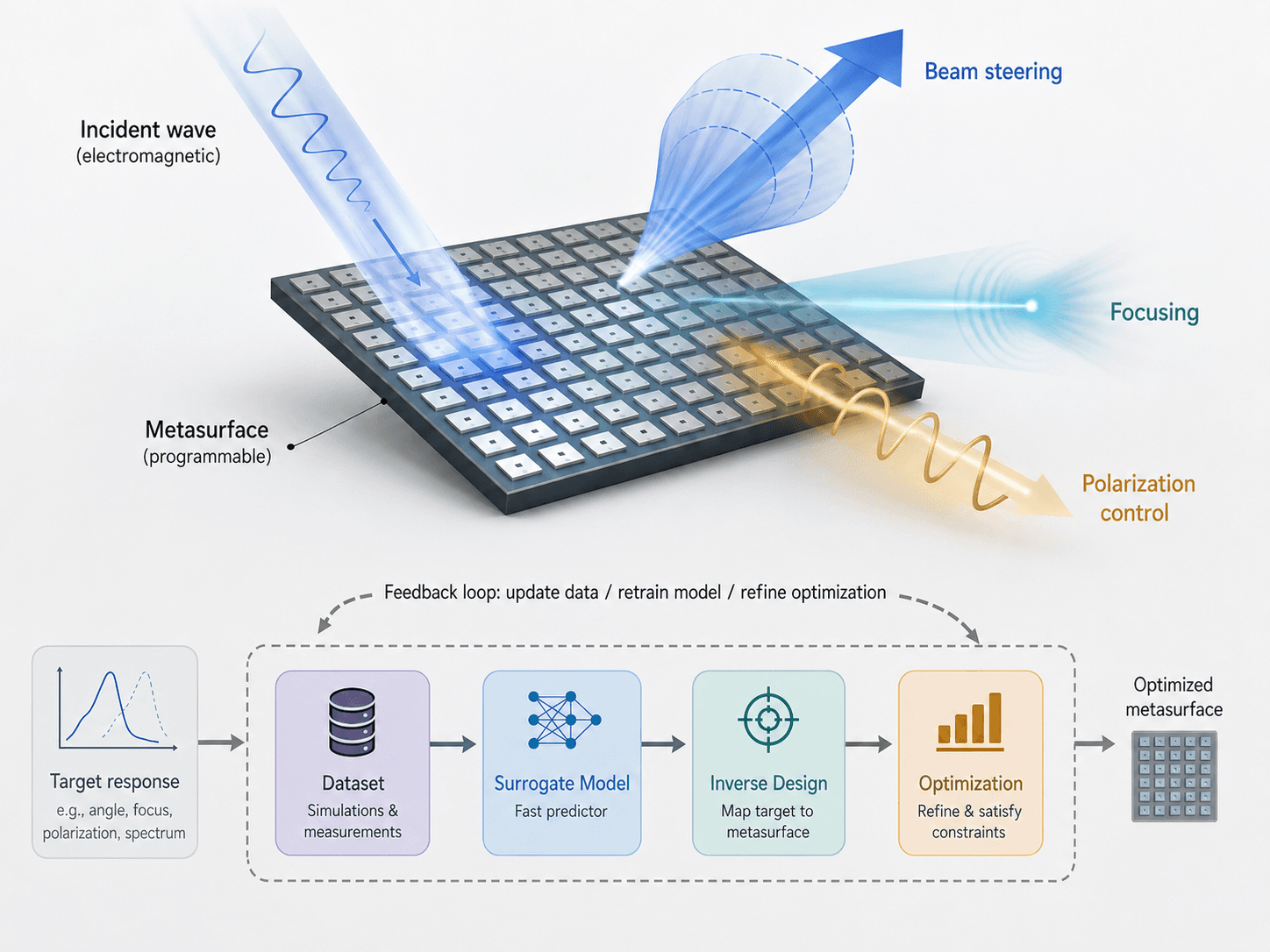
Machine-Learning-Assisted Design of Photonic Crystals and Metasurfaces representative placeholder

This research direction mainly introduces machine learning methods into the structural design of photonic crystals and metasurfaces. By establishing the mapping relationship between structural parameters and optical responses, it realizes rapid prediction, inverse design and performance optimization of micro-nano optical structures. The research contents include spectral response prediction, mode feature recognition, structural parameter optimization, construction of metasurface unit libraries, and intelligent search for high-performance devices. This direction can break through the limitations of traditional methods such as low efficiency of parameter scanning, complex design space and long optimization cycles, and provide efficient intelligent design methods for high-Q resonance, bound states in the continuum (BIC), nonlinear enhancement, polarization regulation, vortex beam generation and terahertz device design.

Machine-Learning-Assisted Design of Photonic Crystals and Metasurfaces

This research direction mainly introduces machine learning methods into the structural design of photonic crystals and metasurfaces. By establishing the mapping relationship between structural parameters and optical responses, it realizes rapid prediction, inverse design and performance optimization of micro-nano optical structures. The research contents include spectral response prediction, mode feature recognition, structural parameter optimization, construction of metasurface unit libraries, and intelligent search for high-performance devices. This direction can break through the limitations of traditional methods such as low efficiency of parameter scanning, complex design space and long optimization cycles, and provide efficient intelligent design methods for high-Q resonance, bound states in the continuum (BIC), nonlinear enhancement, polarization regulation, vortex beam generation and terahertz device design.

Key Questions

  • How to establish an accurate mapping between structure and optical response?
  • How to achieve efficient inverse design of complex micro-nano structures?
  • How to improve the physical interpretability of machine learning design results?

Main Methods

  • Data-driven Modeling Theory
  • 智能优化与反向设计理论
  • 物理约束机器学习理论
Nonlinear and Quantum Optical Metasurfaces representative placeholder

Research on Nonlinear and Quantum Optics mainly focuses on the interactions among intense light fields, micro-nano structures and quantum-state light fields. It explores ways to enhance nonlinear optical processes via micro-nano platforms such as photonic crystals and metasurfaces, and realizes the generation of entangled photon pairs, quantum light sources, frequency conversion as well as the manipulation of quantum states of light fields. This research field serves as a crucial bridge connecting classical light field regulation, nonlinear frequency conversion and quantum information applications.

Nonlinear and Quantum Optical Metasurfaces

Research on Nonlinear and Quantum Optics mainly focuses on the interactions among intense light fields, micro-nano structures and quantum-state light fields. It explores ways to enhance nonlinear optical processes via micro-nano platforms such as photonic crystals and metasurfaces, and realizes the generation of entangled photon pairs, quantum light sources, frequency conversion as well as the manipulation of quantum states of light fields. This research field serves as a crucial bridge connecting classical light field regulation, nonlinear frequency conversion and quantum information applications.

Key Questions

  • How to significantly improve the on-chip nonlinear conversion efficiency?
  • How to realize a high-brightness, tunable quantum light source?
  • How to realize the unified design of nonlinear processes and quantum state engineering on micro-nano platforms?

Main Methods

  • Nonlinear Optical Coupling Theory
  • Theory of Quantum Optical Fields and Parametric Processes
  • Theory of Micro-Nano Resonance and Optical Field Enhancement